Kubatana.net ~ an online community of Zimbabwean activists

Archive for the 'Governance' Category

South Africa a democracy?

del.icio.us TRACK TOP
Wednesday, September 1st, 2010 by Leigh Worswick

South Africa has been putting pressure on Zimbabwe to adopt a democratic approach to running the country. One of the fundamental aspects of  a democracy is the freedom of press. Without this essential element a country cannot claim to be democratic and fair if its people’s ability to express their views is oppressed. South Africa is being somewhat hypocritical in their conduct, as government backs proposals for a new law aimed at muzzling the press. “If the protection of Information Bill becomes law South Africa will have crossed a dangerous threshold towards a corrupt, dysfunctional and impoverished autocracy.”

Borrowdale settlement razed

del.icio.us TRACK TOP
Thursday, August 26th, 2010 by Amanda Atwood

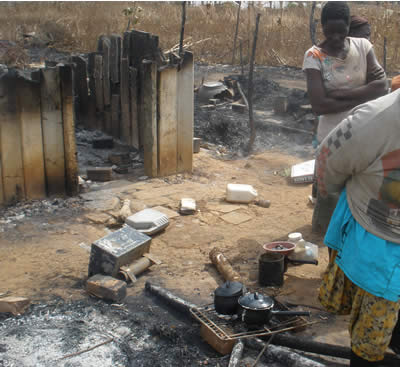
Photo Credit: Zimbabwe Lawyers for Human Rights

Last week, a friend and I went on a run that took us half way around the Borrowdale Race Course. The route reminded me about Natasha’s blog about the community living around the track, and their opinion of horse-piping.

The community was still there as we went past. As Natasha wrote, the contrast between the grass and cardboard shacks this community lives in  – exposed in the vlei in desperate conditions – and the enormous mansions of Gun Hill and Borrowdale which surround them is sobering and disturbing. But still, this was home for the people who lived there. Or it was until police raided the settlement and burnt it in a midnight raid yesterday, according to this statement from Zimbabwe Lawyers for Human Rights:

Police blatantly violate the right to shelter in raid and burning of Borrowdale settlement

Zimbabwe Lawyers for Human Rights (ZLHR), is greatly shocked at the unbecoming conduct of identified members of the Zimbabwe Republic Police (ZRP) who at about 00:30 hours on 25 August 2010 raided and destroyed an informal settlement at Borrowdale Race Course in Harare.

At least thirty police officers, easily identifiable due to their police uniforms believed to be stationed at Harare Central Police Station and the nearby Highlands Police Station proceeded to order the settlers to remove their possessions from the shacks and go and built homes in their rural areas. After 10 minutes elapsed, the ZRP members, some of whom were armed, and also accompanied by police dogs, ordered all the settlers to embark into the police vehicle and proceeded to torch at least a hundred shacks. This was done despite the fact that some of the settlers had not managed to remove their possessions. The settlers were then detained in the cold weather until the early hours of the morning when they were taken to Harare Central Police Station.

Most of the settlers whose shacks were torched down are victims of Operation Murambatsvina and some of them are employees of the Borrowdale Race Course. They moved to the settlement after being rendered homeless when their houses were destroyed under the widely condemned clean-up campaign while some of them started to reside at this settlement in 2000. From time to time the police were said to have raided the said settlement, arrested the settlers on the pretext of hunting down thieves and eventually releasing them without any charges being leveled against them.

ZLHR lawyers attended to Harare Central Police Station to assist the detained settlers who were not easily locatable due to the fact that the police have not made any entries in their detention book. ZLHR lawyers, managed to locate the 55 settlers who include 5 minor children at 13:30 hours. Lawyers have since been denied access to the settlers by the Criminal Investigation Department section represented by one Superintendent Muchengwa who advised lawyers that the clients will be allowed legal representation once they have been formally charged.

ZLHR condemns the unlawful and unprocedural actions taken by the police. Evicting and burning down the settlers’ houses without adequate notice and without providing alternative accommodation and the arbitrary deprivation of property that ensued following the illegal torching of the shacks is a violation of their right to shelter and to family life, which are guaranteed under the African Charter on Human and Peoples’ Rights, to which Zimbabwe is a voluntary State Party.

It is also disheartening that the police chose to carry out such a vindictive action against the settlers during this cold spell when they don’t have any powers to evict people. Only the messenger of court or Deputy Sheriff can carry out evictions on the strength of a valid court order which does not exist in the case at hand. Further, it is also sad to note that these arbitrary illegal actions were carried out after the Mayor of Harare had written a letter to residents assuring them that all informal settlers will not be evicted unless alternative accommodation is secured.

No lessons have been learned from the failures and illegalities of Operation Murambatsvina, and the state – through the City Council and the Ministries concerned are urged to bring to an end such illegalities and attend to issues of lack of adequate housing in a lawful and orderly manner.

ZLHR, urges the police to carry out investigations into this illegal conduct that is tantamount to arson as defined in the Criminal Law (Codification and Reform) Act and bring those accountable for these inhumane acts to justice.

ZLHR, further wishes to remind the police to be mindful of the right of all accused persons to legal representation of their choice, and the right to be informed of any criminal charges upon arrest.

ZLHR calls upon all state actors to desist from violating the economic and social rights of innocent citizens but to work towards the progressive realization of these rights as in accordance with Zimbabwe’s human rights obligations.

Where is the toll road money really going?

del.icio.us TRACK TOP
Wednesday, August 25th, 2010 by Michael Laban

Just come back from two trips to Eastern Highlands. Tolls both times, both ways. Now, I’ve seen a newspaper that says, “$15 million has been collected. Toll booths built. Roads paved.”

The only pavement I have seen laid is the rumble strips at the approach to these toll booths.

No potholes have been filled, edges maintained. I haven’t seen a new sign, or even new road markings painted.

Strikes me the whole scheme is job creation. New employees, or old employees now able to sit outside. And new places for the Zimbabwe Republic Police (ZRP) to sit and do nothing (which they do so well).

And I see ‘new’ things (who sold them those?). E.g. caravans, road cones, porta loos, solar panels.

Can someone show me, (not tell me), the point of this exercise? Not verbage – aims, objectives, uses, plans – but actual things? What has been done aside from collecting $15 million?

Lessons from Kenya: The Referendum

del.icio.us TRACK TOP
Wednesday, August 25th, 2010 by Bev Clark

The Zimbabwe Election Support Network (ZESN) has just issued the following press statement:

ZESN sent a delegation to Kenya to draw lessons on the constitutional review process and the referendum. Kenya has come a long way on its journey in making a new constitution and finally on the 4th of August 2010, the Kenyans voted for a new constitution. Kenya shares a number of similarities with Zimbabwe, namely that both were British colonies in the past, both have had a Lancaster House Constitutions, and more importantly that both currently have power sharing governments that emanated from the contested elections results. They also experienced post-election violence after their polls. Similar to Zimbabwe as part of the power sharing settlement they had to make a new constitution before elections which are scheduled in 2012 after all the laws had been made.

While the two countries share some similarities, they are unique in a number of ways. Notwithstanding these unique attributes, a number of lessons can be drawn from the Kenyan experience and this statement provides reflections on the lessons we can draw from the Kenyan experience.

* In their efforts to draft a new constitution, the Kenyans did not begin from scratch. They built on the progressive aspects of previous drafts such as the Bomas draft, the Guy draft and the Naivasha drafts, all drafts which had failed to sail through but from which they were able to sift through and get the positive aspects.
* There was a commitment from the onset that Kenyans would do participate in the referendum meaningfully. This was ensured through the provision of civic education by the Committee of Experts and the civic society groups.
* A Committee of Experts was set up to be in charge of the drafting of a new constitution and this committee was responsible for taking submissions from the public in written form. After this process, the committee presented the first draft to the citizens to make comments on. It is interesting to note the stage at which the people participated in the process. Drafts of the constitutions were disseminated in a number of languages and millions of copies were circulated for people to make their submissions.
*  Kenya had a clear road map for the review process and there were timeframes for each activity that were adhered to, hence they were able to keep the timeframe for the drafting of the new constitution and putting it to referendum within the agreed timeframes.
* More importantly, the constitution review process for Kenya was rooted in an act of parliament entitled the Constitution of Kenya Review Act of 2008 which provided benchmarks for the constitution making process and the manner in which it would be done. In addition, Kenya had comprehensive referendum regulations which had been made by the newly sworn in Interim Independent Electoral Commission (IIEC), an Electoral Code of Conduct and an Election Offences Act for political parties enshrined in an Act of Parliament. All these legal provisions provided for a transparent and open process that increased the credibility, openness, transparency and inclusiveness of the review process and the IIEC.
* There was a strong political will to follow the provisions of the legal framework that had been put in place for the review process. ZESN noted that all stakeholders were consulted in all processes; there was constant dialogue and collaboration between the IIEC, civic society, media, and the Committee of Experts. This solid relationship made processes such as accreditation of observers less cumbersome.
* The success of the referendum was a function of number of factors. There was the political will to follow the spirit of the laws that had been enacted specifically for the constitutional review process.
* Violence early warning systems were put in place by civic society organisations to provide early warnings for possible violent hotspots and deter the ensuing of violence. These were published in state and private media.
* The IIEC ensured that over 10000 observers were accredited for the referendum in order to protect the integrity of the vote.
* Agents for the green (groups in support of the constitution) and reds (groups opposed to the draft constitution) were accredited to monitor the processes.
* Campaigns for the constitution and against the constitution were closely monitored for the presence of hate speech and any aspects that violated the Electoral Offences Act.
* Results were announced timeously and in some polling stations counting was done live on television. The process of tabulating results was open and results were announced with 48 hours.
* While there was opposition to the draft constitution especially on issues of abortion and Islamic courts these issues did not take away the fact that the Kenyan constitution was a progressive document   crafted in an inclusive and participatory manner by all stakeholders.

In conclusion, ZESN observed that the constitution review process in Kenya was grounded in a solid legal framework with benchmarks that provided timelines and specifications for the conduct of the process. Processes were not left to chance. In additions, institutions responsible for the review and the conduct of the referendum that is the committee of experts and the IIEC respectively were independent in the carrying out of their mandate and were open to the scrutiny of civil society and all stakeholders.

Pity the University Students and Graduates

del.icio.us TRACK TOP
Tuesday, August 24th, 2010 by Marko Phiri

Everyone knows by now that Zimbabwe’s education has deteriorated to levels that will be tough to reverse without any radical policy changes. Other commentators have however opined that until there is a new political dispensation, we cannot expect any real change for the better, which could in effect rather ominously mean these woes will be with us indefinitely – of course with the post-September 2008 political power games being read as pointers to predict the country’s future. Others have pointed at the diamond windfall as just what the doctor ordered to fix the abject education and health services, but inveterate pessimists who know gemstones in the hands of an African politician are not holding their breath.

There still is unabated brains flight in the country’s once awed institutions of higher learning as academics apply for or are offered staff development programmes outside the country but never return to their varsities. And with good reason, some would say. Meanwhile, students who graduate with what have been mocked as unbaked degrees return as teaching assistants, something that would be frowned upon by serious academics. But then this can be found all over the whole education sector here where unqualified teachers are taking children for their O’ and A’ level classes and straight to university!

As we speak, for the umpteenth time the opening of some varsities has been pushed further and some students are already saying they are imagining the academic year may well begin in December when classes should have begun this month. I know a number of National University of Science and Technology students who have left for South Africa as they say they cannot just sit and wait for the unknown. While they have said they will be coming as soon as they are informed that classes have started, such stories have been heard before with many abandoning their studies altogether after having found jobs during their sojourn. All this despite the fact that once upon a time getting an opportunity to study at university was literally embraced with both hands as it was a guarantee that one was set for life. Now students abandon their studies without any second thoughts, after all they are failing to pay their fees, so why pay the exorbitant fees only to have lecturers absent from their posts? It makes sense then to exchange one’s academic cap for hustling in the mean streets of Johannesburg when a degree ought to provide one with a middle class lifestyle – at least in a normal economy.

Zimbabwean students themselves attending university here are witnessing how standards have gone down and one quipped that while some are quitting their studies and complain that they is no learning going on to give weight and meaning to “degree”, she will stick it out as long as in the end she gets that piece of paper that says she went to university and has “qualifications.” But the circumstances of young people who have university education become heart-rending when other countries we always thought viewed our education with awe become “suspicious” of these university degrees and have second thoughts about employing a Zimbabwean graduate.

A young man told a sad story recently about how his “degree” failed to get him a job in South Africa. You see, he got a degree from one of the “state universities” that were once teacher training institutions, but prospective employers in South Africa told him they did not recognise his institution and therefore his degree. He reports he was told the only Zimbabwean degree these people would accept would be from the University of Zimbabwe, but also with reservations. And their reasons? There is no meaningful education going on in Zimbabwe’s universities! How’s that coming from a bunch of people whose education standards is something people here have always mocked?  Now the young man is back in the country clueless about what to do with his future despite having invested four years of his life studying toward his now useless degree. The superiority of Zimbabwean education is no doubt under scrutiny not just among Zimbabweans themselves, but also in the region if not across the globe and the unfortunate part is that young people who enter university and those who acquire other tertiary qualifications have their sights set on regional and overseas job markets as there are no employment opportunities here to match their “qualifications.” So where does that leave them? Skills development is no doubt every nation’s richest investment that overlaps generations but Zimbabwe’s circumstances raise the spectre of diminished returns, after all students are already virtually teaching each other and graduates being produced out of those “interactions.”  The list of top 500 universities in the world was released recently and some watchers did not even bother to check where ours are placed.

Is Someone Thinking of an Energy Plan for Zimbabwe?

del.icio.us TRACK TOP
Tuesday, August 24th, 2010 by Catherine Makoni

When I left work at 2pm on Friday I carried some work home with me. You see, l foolishly intended to do some work over the weekend. Foolishly, because like most Zimbabweans, l live with the reality of load shedding. Some have it worse than others. Like most Zimbabweans, the electricity goes when it goes and comes when it comes. According to the ZESA schedule, I was not supposed to have load shedding over the weekend, but at noon on Friday, it was lights out in my neck of the woods. It remained lights out until Saturday at about 3 pm. We had electricity all of 30-40 mins before it was lights out again, throughout the rest of the day and into night. Sunday morning came and went with no electricity. It only came back at about 3pm on Sunday. Needless to say, I could do no work; I was busy fretting about the putrefying veges and leftovers in my fridge.

I have relatives living in peri-urban Gweru. This used to be a thriving farming community before the farmers were “liberated” of their farms. These farmers would deliver tank loads of fresh milk to Dairibord, among other produce. Now of course that doesn’t happen anymore. The merry (in a manner of speaking) band of stragglers who resettled on some of these farms struggle to produce enough maize to feed themselves from one season to the next. Of course, the region is not a good maize growing region. But that’s another story. The story is that for the few remaining dairy farmers, the power outages have really hit them hard. On a typical day, it’s lights out at 5.30 and back in the evening or as late as 10 pm. How is anyone expected to maintain any level of productivity when you don’t have electricity for the main and productive part of the day? Think of the wheat farmers who cannot irrigate their winter wheat crop because there is no power. To think this is a story that is being repeated even as our long comatose manufacturing industry tries to sputter to life. It is being repeated in hundreds of thousands of homes where young people are trying hard to study for their “O” and “A” Level exams. It is being repeated in the hospital wards, labs and theatres where doctors and nurses are failing to give patients proper care. I would imagine the story is the same in the mining industry. As for business, you would be well advised to have your office in the CBD. Go 2 km out of the CBD and you are fair game for power cuts. It seems ZESA is determined to kill off what few businesses remain viable after the last ten years of madness in Zimbabwe.

What I am not hearing in all this talk of power (the political kind) is any talk of an energy plan. The truth of the matter is that the sub region is heading for a power crisis (of the electrical kind!). I hope for all our sakes, someone is alive to this reality or else we are doomed to be a nation of noisy, air polluting generators. City of Harare it would seem, has woken up and smelt the er…sunshine. They have started installing solar traffic lights. So how about streets lights to stop the muggings?

And who says, we should only have one power utility company in Zimbabwe?