Kubatana.net ~ an online community of Zimbabwean activists

Archive for the 'Governance' Category

Godwin is wrong about Zimbabwe

del.icio.us TRACK TOP
Friday, May 13th, 2011 by Amanda Atwood

Author and historian Blessing-Miles Tendi shared with Kubatana his response to Peter Godwin’s recent opinion piece in the New York Times:

Peter Godwin wrote an article entitled “Making Mugabe Laugh” in the International Herald Tribune on 20 April 2011. In the article Godwin claimed that the Ivory Coast under its recently ousted President Laurent Gbagbo and Zimbabwe, led by President Robert Mugabe, have some “striking parallels”. Godwin argues that both countries, led by highly educated presidents or intellectual-politicians who were liberators from repressive regimes, were once viewed as success stories in their respective regions. These parallels are true but they are hardly striking.

Africa has and continues to be led by many other intellectual-politicians who are also viewed as “liberators” of some sort. President Paul Kagame of Rwanda, Prime Minister Meles Zenawi of Ethiopia, former South Africa President Thabo Mbeki and Malawi President Bingu wa Mutharika are only a few examples. Similarly Godwin’s narrative of a “success” story gone wrong can be applied to several African countries. Moreover, when Godwin likens Gbagbo and Mugabe by arguing that they resorted to “racist vestments of extreme nativism” he simplifies the deeply complex and different motives for both leaders’ actions.

Godwin also invents similarities in order to bolster his straw man argument that the Ivory Coast and Zimbabwe bear some “striking similarities”. For instance he asserts that the “two countries have also been similarly plagued by north-south conflicts”. This is an irresponsible distortion of history. Indeed the Ivory Coast has been deeply divided by a north-south conflict centring on religion, among other important factors. However, Zimbabwe has never experienced a north-south conflict in its history.

Where the Ivory Coast and Zimbabwe “crucially diverge”, Godwin argues, is that whereas West Africa’s leading power Nigeria refused to recognize Gbagbo after he lost the 2010 presidential election to Alassane Ouattara, Southern Africa’s leading state South Africa helped Mugabe stay in power after he lost the 2008 election. According to Godwin former South African president Mbeki “bullied” opposition leader Morgan Tsvangirai into a power-sharing government led by Mugabe. Such a conclusion can only be reached by someone who has never taken the time to interview all the political actors involved in Zimbabwe’s 2008 power-sharing negotiations. Had Godwin done this, he would know that Tsvangirai was not bullied into a power-sharing arrangement. Negotiators to the power-sharing agreement, including Mbeki, have all recounted to me in interviews that sharing power was at the time the only viable solution to the 2008 political deadlock in Zimbabwe. The terms of the power-sharing agreement were crafted and agreed on by Zimbabwe’s rival political parties – not Mbeki as Godwin seems to believe.

I share Godwin’s criticism that power-sharing is a “democracy-defying model”. The spread of the model in recent years is a cause for concern. But it is clear that the question of how to resolve conflict in Africa remains extremely complex, and there may be good reasons for thinking that in some cases the benefits outweigh the costs. After all, power-sharing is usually justified principally in terms of the number of lives it is likely to save in the short term. However, in order to make accurate decisions as to when these benefits outweigh the costs, it is essential to fully recognise the barriers that power-sharing may create to genuine reform. Even if power-sharing arrangements do deliver greater peace and stability in the short term, their flaws suggest that it should only be used as a last resort.

Godwin is wrong when he writes that “Zimbabwe’s democratic opposition has been rewarded by the international community by being largely ignored”. By international community I presume that Godwin means the West. Here in Britain, where I reside, Zimbabwe features in the media frequently and it is discussed in parliament more than any other African state. There are even combined American and European Union targeted sanctions against Zimbabwe – something more undemocratic and human rights violating states such as Angola, Swaziland, Equatorial Guinea, Pakistan and Middle East states are not subject to.

The problem with the West is that double standards on global human rights and democracy promotion have helped Mugabe to cast and reject Western interference as imperialism. Western double standards have become undemocratic regimes’ fall guy for their unwillingness to introduce genuine, indigenous, workable and sovereign institutions for human rights promotion and protection. Consequently, Godwin’s call for America to support democracy and human rights movements in Zimbabwe is misguided. America and the West are part of the problem – not the solution – in Zimbabwe’s problems.
Have your say – Is the Zimbabwe case in need of a special roadmap?

del.icio.us TRACK TOP
Friday, May 13th, 2011 by Amanda Atwood

The Youth Forum shares this invitation for feedback and debate:

A lot of media hype has been created around the election roadmap for Zimbabwe that has again been the centre of intense negotiations amongst negotiators from Zanu PF and the two MDC formations. The Youth Forum will in the coming weeks be hosting discussions and consultations among youth on whether Zimbabwe is really in need of a special election roadmap. This is against the background that SADC approved in 2004 principles and guidelines governing democratic elections. Other SADC countries notably South Africa and Botswana have developed sound electoral systems based on these principles and guidelines.

The Youth Forum contends that if properly and fully followed, these guidelines can lead to the holding of a free and fair election in Zimbabwe. Section 7 of the SADC guidelines clearly lays out specific requirements to guarantee credible elections by member states. The Youth Forum will therefore seek to give young people a chance to scrutinize both the roadmap and the guidelines and detailed analyses of both will be made to determine whether SADC is not going round in circles in facilitating negotiations over the current proposed Zimbabwe election roadmap.

Read the:

And share your comments below or contact youthforumpublicity [at] gmail [dot] com with your input.

Questioning Mugabe’s legacy

del.icio.us TRACK TOP
Tuesday, May 3rd, 2011 by Bev Clark

Feedback from a Kubatana subscriber in response to a recent blog from Upenyu:

Mugabe is a freedom fighter leader where democracy is a non-event. Strategy to win the war is mainly by sabotage and by any means possible. Plans are done secretly and the focus is only fixed on winning the war. The politics of freedom fighters are narrowed down and centred on few individuals considered brave and shrewd with charismatic characters.

With Mugabe in particular, being eloquent in English, even though with limited vision, he became a star among less educated freedom fighters, now the war vets. Come independence in 1980, the world expected him to shift his leadership style from freedom fighter leadership to democratic leadership. This paradigm shift was a bit heavy on his shoulders. The concept of ‘how difficult to train an old dog some new tricks’, applied. The same dirty tricks they used during the war are still the same they are using to stay in power today, whatever cost.

An independent nation must reflect a high degree of freedom (emancipation and sovereignty of the people). This stage requires dynamic leadership and this is lacking in Mugabe.

A dynamic leader needs to have a full range of appreciation of all the basic tenets of governance. These include modern politics, economics, technology, environment, globalisation and social justice. He/she works for not more than ten years as a president and retires from office.

To conclude, according to my own opinion Mugabe has no legacy to leave behind expect that of poor leadership.

Use Anuacho as my name if you wish to publish this. In Zimbabwe there is no freedom of expression. We are not yet independent as a nation.

Dogged resistance

del.icio.us TRACK TOP
Tuesday, May 3rd, 2011 by Bev Clark

Christopher Hitchens on Fear, Peter Godwin’s latest book:

If you want a catalog of those sins, turn to Godwin’s books. But don’t read them just for outrage at the terrible offense to humanity. They also describe a new sort of Zimbabwean, emancipated from racial and tribal feeling by a long common struggle against a man who doesn’t scruple to employ racial and tribal demagoguery. In those old days of arguing with the white settlers, one became used to their endless jeering refrain: “Majority rule will mean one man, one vote—one time!” They couldn’t have been more wrong. Since gaining independence three decades ago, the Zimbabwean people have braved every kind of intimidation and repression to go on registering their votes. They have made dogged use of the courts and the press, which continue to function in a partial way, to uphold pluralism and dissent. Mugabe has lost important votes in Parliament and—last time—his electoral majority in the country at large. Only the undisguised use of force and the wholesale use of corruption have kept his party in office. One day, the civic resistance to this, which was often looked-down upon by people considering themselves revolutionary, will earn the esteem and recognition it deserves.

HIFA 2011: Burn Mukwerekwere Burn

del.icio.us TRACK TOP
Friday, April 29th, 2011 by Upenyu Makoni-Muchemwa

The xenophobic violence in South Africa has grabbed headlines in South Africa. Gangs of angry young South Africans frustrated by poverty and unemployment took to the streets of townships like Kayelitsha in Cape Town brutally assaulting and killing hundreds of foreigners.

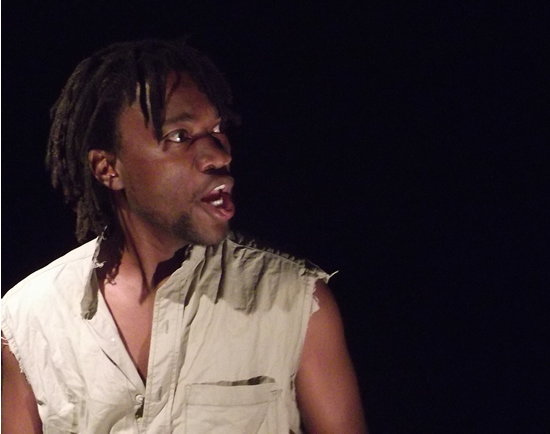
Burn Mukwerekwere Burn is the story of two Zimbabweans caught in the middle of the maelstrom. The play is at times brutal in its honesty and assessment of the reasons why there are an estimated three million Zimbabweans resident in South Africa. As they attempt to journey to safety, they reflect on the predicament they find themselves in and characters are forced to deal with their own tribal differences.  Njabulo is a Shona teacher reduced to carving trinkets for foreigners to buy. Farai, is Ndebele and a trader in South Africa to restock in time for the holidays.

Written by Blessing Hungwe, featuring himself and Michael Kudakwashe, this narrative is the woven perspectives of both protagonists, trying to survive a night of horror in South Africa. Ultimately they come to understand that the things that bind them together, a love of country and life, are greater than the things that keep them apart.

Zimbabwe: How Can U Entrust A Whole Country To A Madman?

del.icio.us TRACK TOP
Friday, April 29th, 2011 by Bev Clark

From a Kubatana member:

Is Dictatorial Behaviour A Form Of Mental Illness? If So can We Capture Such Individuals And Hand Them Over To Psychiatrists. 4 How Can U Entrust A Whole Country To A Madman?